Speakers at Dhaka Seminar Call for Upholding Manabendra Narayan Larma’s Constitutional Vision to Build a Pluralistic State

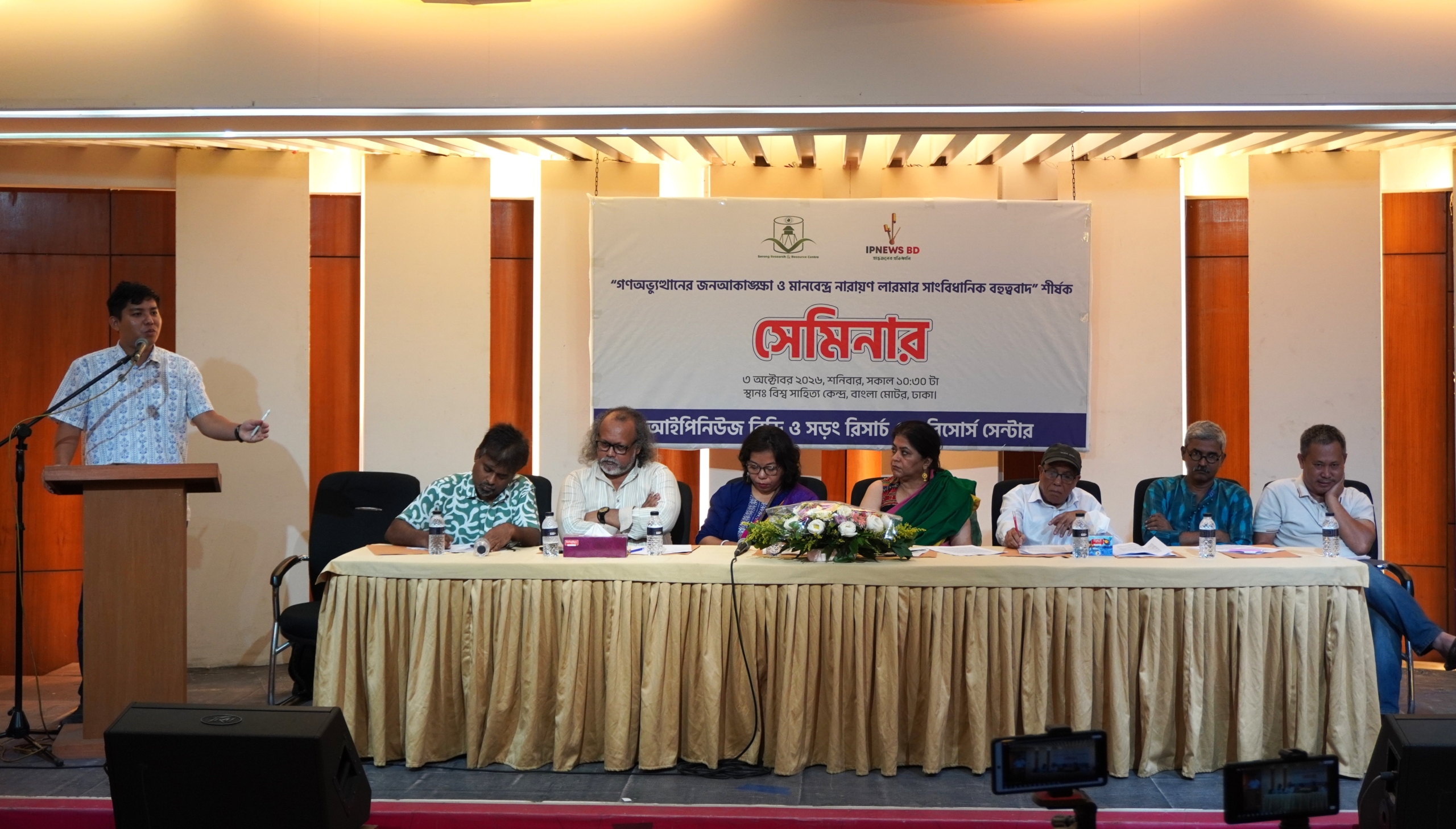
Dhaka, 3 October 2026 (Saturday): A seminar titled “The People’s Aspirations of the Mass Uprising and Manabendra Narayan Larma’s Constitutional Pluralism” was held today at the Bishwo Shahitto Kendro (World Literature Centre) in Dhaka, jointly organised by Sorong Research and Resource Centre and IPNEWS BD.
The seminar was moderated by Satej Chakma, Advisory Editor of IPNEWS BD. In his opening and concluding remarks, he stated that regardless of what policymakers decide in the next constitutional amendment, the voices of the people will continue to be raised and the ideas of Manabendra Narayan Larma will continue to be brought back into public discourse until a genuinely pluralistic state is established.
Pavel Partha, a writer and researcher, presented the keynote paper. The penalists included Barrister Sara Hossain, Senior Advocate of the Supreme Court of Bangladesh; Sohrab Hasan, poet and journalist; Bakhtiar Ahmed, Professor in the Department of Anthropology at Independent University, Bangladesh (IUB); Dipayan Khisa, Central Committee Member of the Parbatya Chattagram Jana Samhati Samiti (PCJSS); Sakhawat Tipu, poet, essayist and editor; and Falguni Tripura, General Secretary of the Bangladesh Indigenous Women’s Network.
Keynote Presentation by Pavel Partha
In his keynote presentation, Pavel Partha stated that, alongside the participation of working-class people in the July Mass Uprising, the widespread graffiti across the country became a visible expression of public aspirations. However, over time, the experiences and histories of working-class people, Indigenous peoples, children and marginalised communities have increasingly become invisible in mainstream narratives. The erasure and removal of graffiti have also obscured the diverse aspirations expressed during the uprising.
He emphasised that the July Uprising should not be viewed merely as a change of government or political regime, but as part of a continuing struggle against long-standing inequalities, colonial structures and authoritarianism. He highlighted the connections between the uprising and earlier movements of popular resistance, including the Language Movement, the Liberation War, the Kaptai Dam protests, and the movements in Madhupur and Phulbari.
Pavel Partha further noted that the disappearance of Kalpana Chakma, the oppression of Indigenous peoples and the persistent denial of justice had also been reflected in various graffiti messages. Slogans such as “Where Is Kalpana Chakma?”, “Justice for Kalpana Chakma” and “Indigenous Lives Matter” brought demands for rights and recognition into public discourse. Similarly, messages such as “When Will the Hills Be Free?” and “Subjugated Hills” highlighted the long-standing discrimination and deprivation experienced by Indigenous communities.
He observed that recognising the histories and voices of marginalised ethnic communities is essential to keeping alive and advancing the aspirations for pluralism, inclusion and ethnic solidarity expressed during the July Uprising.
Pavel Partha also argued that these expressions of public resistance are deeply connected to Manabendra Narayan Larma’s political and constitutional philosophy. At the heart of Larma’s vision was the principle of ensuring equal dignity, rights and participation for every ethnic community, social class and marginalised group within the state. Larma envisioned a state in which the identity of one particular nation or group would not be imposed upon others, and citizenship would be grounded in equality, justice and dignity.
Barrister Sara Hossain: Larma’s Constitutional Vision Remains Relevant
Barrister Sara Hossain, Senior Advocate of the Supreme Court of Bangladesh, stated that Manabendra Narayan Larma’s constitutional philosophy remains highly relevant today. She noted that Larma had spoken in Parliament about women’s rights as well as the rights of all working people.
Although pluralism has been mentioned in the July Charter, she observed that the document does not clearly explain how discrimination will be eliminated or what specific measures should be undertaken to address existing inequalities.
She further stated that Indigenous peoples were not ensured participation in the activities of the Consensus Commission. The July Charter, she argued, does not provide the necessary clear direction on how to address inequalities between women and men, rich and poor, or majority and minority communities.
According to her, giving renewed importance to Manabendra Narayan Larma’s constitutional philosophy is essential to establishing genuine pluralism. She called for sustained public engagement, advocacy and demands for these principles, emphasising that people must not lose hope.
Professor Bakhtiar Ahmed: The State Must Recognise People’s Experiences and Rights
Bakhtiar Ahmed, Professor in the Department of Anthropology at Independent University, Bangladesh (IUB), stated that if the state had recognised and embraced Manabendra Narayan Larma’s philosophy, Bangladesh could have developed into a more humane state.
However, he expressed uncertainty about how far the aspirations generated by the mass uprising would be realised in practice.
He recalled Larma’s significant role in the struggle against the dominance of Bengali nationalism in the Chittagong Hill Tracts (CHT). At the time, the state failed to give due consideration to Larma’s arguments and demands. Larma’s political vision, he emphasised, extended beyond the rights of any particular region or community; it addressed the rights of marginalised peoples, diverse ethnic communities and working-class people across the country.
Professor Ahmed noted that Manabendra Narayan Larma had articulated the principles of pluralism being discussed in contemporary Bangladesh as early as 1972. He stressed the importance of reassessing Larma’s ideas in the context of present-day realities.
He further argued that the true character of the state becomes more apparent when viewed from its margins. Therefore, the state must change its approach towards its people. Rather than relying primarily on intelligence-based assessments, it should give greater importance to people’s lived experiences, opinions and rights. He called for a state that trusts its citizens and creates avenues for governance based on meaningful public participation.
Sohrab Hasan: Pluralism Must Extend Beyond Rhetoric
Poet and journalist Sohrab Hasan observed that pluralism often remains confined to rhetoric rather than being reflected in practice. He questioned why incidents such as adult women being prevented from travelling abroad because they are identified as unmarried continue to occur.
He also pointed out that religious minorities and Indigenous peoples lack representation in the various commissions that have been formed. Such circumstances, he argued, cannot be considered genuine pluralism.
According to Hasan, although the Constitution
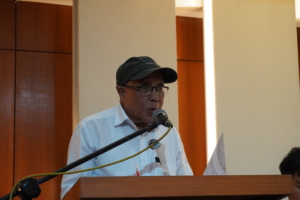
of Bangladesh refers to equality and equal rights, it also contains provisions and frameworks that allow discrimination to persist. One example, he noted, is the constitutional identification of Indigenous peoples as Bengali. He stressed that the state should not determine the identity of a people on their behalf.
He further stated that, despite the signing of the Chittagong Hill Tracts Accord, Indigenous peoples in the region have become minorities in their own territories. One of the Accord’s principal objectives was to establish the rights of Indigenous peoples and preserve their traditions, cultures and languages. However, these objectives have yet to be fully realised.
Describing Manabendra Narayan Larma as a humanist thinker, Hasan said that Larma believed in equality, justice and human rights. His ideas and philosophy remain significant for building a pluralistic and discrimination-free society.
Dipayan Khisa: Communities Must Have the Right to Define Their Own Identities
Dipayan Khisa, a Central Committee Member of the Parbatya Chattagram Jana Samhati Samiti (PCJSS), stated that the July Charter refers to establishing Bangladesh as a country of multiple ethnicities, religions and languages. However, he emphasised that more explicit discussion is needed on how such pluralism will be ensured in practice.
Referring to the constitutional reform process, he noted that a commission had been formed under the leadership of Home Affairs Adviser Salahuddin Ahmed. Khisa observed that Meghalaya, an Indigenous-majority state in India with distinctive constitutional and administrative arrangements, could provide relevant context for understanding Indigenous peoples’ rights and identities. He questioned why the rights and identities of Indigenous and minority communities in Bangladesh appeared to be receiving insufficient attention within the exercise of state power.
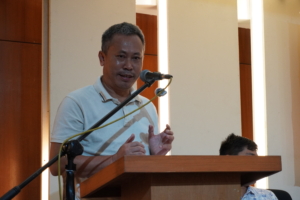
He stressed that the state has no authority to impose identities on communities. Unfortunately, he said, state and intelligence structures have sometimes influenced how different communities in Bangladesh are identified.
According to Khisa, each community has the right to determine its own ethnic and cultural identity, while the responsibility of the state is to recognise and respect that identity.
He concluded that discussions on Manabendra Narayan Larma’s constitutional philosophy would remain relevant for as long as Bangladesh exists as a state. Whenever constitutional reform, equality, pluralism and a discrimination-free society are discussed, Larma’s ideas and vision must be remembered.
Falguni Tripura: Indigenous Rights and Recognition Are Essential to Pluralism
Falguni Tripura, General Secretary of the Bangladesh Indigenous Women’s Network, said that she had heard about Manabendra Narayan Larma since childhood. She recalled that Larma had advocated for the rights of poor and working-class people, nomadic communities, fishers and women.
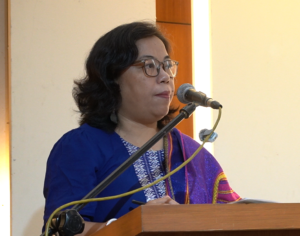
During the drafting of the Constitution of Bangladesh, Larma raised questions of rights and justice for these communities in Parliament. His philosophy encompassed equality and the rights of all people, including women and men, farmers and workers, and other sections of society.
Referring to the mass movement of 2024, she stated that the aspirations expressed by the people had not been fully reflected in the subsequent political developments. Indigenous communities in Bangladesh continue to face various forms of oppression and discrimination, while their rights are increasingly being restricted.
She noted the contrast between the government’s rhetoric about a “Rainbow Nation” and the continuing constraints on the constitutional, political, social and cultural rights of Indigenous peoples.
Tripura emphasised that establishing a genuinely pluralistic state requires more than verbal commitments. It demands concrete recognition of Indigenous peoples’ rights, dignity and identities.
Sakhawat Tipu: A State’s Character Is Reflected in How It Treats Marginalised Communities
Sakhawat Tipu, poet, essayist and editor, spoke about his personal connection with the hills, recalling that he grew up in Chattogram, surrounded by the distinctive landscape where hills and the sea meet. He said this background had fostered a deep connection with Manabendra Narayan Larma’s philosophy.
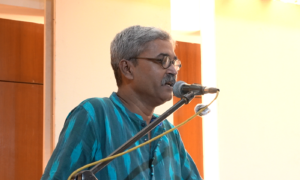
Tipu described Larma’s ideas as highly relevant to contemporary Bangladesh. He argued that a state cannot truly prosper if all sections of its population are not doing well.
He concluded that the true character of a state is revealed by whether its minority and marginalised communities can live safely, peacefully and with dignity.
Key Takeaways from the Seminar
The speakers collectively emphasised that Manabendra Narayan Larma’s constitutional philosophy remains relevant to the ongoing discourse on constitutional reform, democracy and the future of Bangladesh. The key points raised during the seminar included:
- Constitutional recognition: Recognise Indigenous peoples and respect their self-identified ethnic and cultural identities.
- Equality and non-discrimination: Translate commitments to pluralism into concrete constitutional, legal and institutional reforms.
- Inclusive decision-making: Ensure meaningful participation of Indigenous peoples, religious minorities, women and other marginalised communities in constitutional reform and policymaking.
- Indigenous rights and justice: Protect Indigenous peoples’ land, culture, language and political rights, and ensure the full implementation of the Chittagong Hill Tracts Accord.
- People-centred governance: Prioritise public participation, human dignity and the experiences of marginalised communities.
- Upholding Larma’s legacy: Revisit Manabendra Narayan Larma’s constitutional philosophy as a framework for advancing democracy, equality and pluralism.
The speakers collectively emphasised that building a genuinely pluralistic state requires moving beyond political commitments towards meaningful recognition, institutional inclusion and the protection of equal rights and dignity for all communities.
Related Knowledges
CHT Regulation 1900
September 18, 2025
The Chittagong Hill Tracts Regulation Act, 1900 is a landmark colonial-era law that granted the…
Rangamati Hill District Council Act
May 27, 2025
The Rangamati Hill District Council (RHDC) is a local government body established to manage administrative,…
Hello world!
January 28, 2025
Welcome to WordPress. This is your first post. Edit or delete it, then start writing!…